Elevating High-End Living Through Strategic Luxury Home Renovation
Embarking on a luxury home renovation is a transformative journey that goes far beyond simple cosmetic upgrades. It is an exercise in precision, where the goal is to align your physical environment with a sophisticated lifestyle. For most high-net-worth homeowners, the challenge isn't just finding a contractor; it's about choreographing a complex symphony of architects, designers, and artisans to create a cohesive masterpiece. You are likely looking for a way to modernize a historic property or customize a newly acquired estate to reflect your personal taste while maintaining or increasing its significant market value.
The stakes are inherently higher in the luxury sector. Every decision, from the grain of the white oak flooring to the specific hue of the integrated lighting, carries weight. A minor oversight in the planning phase can lead to cascading delays or, worse, a finished product that feels disjointed. This article covers the strategic approach required to manage a high-end overhaul, focusing on the nuances of material provenance, the integration of invisible technology, and the logistical realities of high-stakes construction.
Related posts
Strategies for Securing the Best Home Loan Interest Rates
Buying a home is likely the most significant financial commitment you will ever make. While the sticker price...
Read more →
Why Hiring an Architect for Home Renovation Protects Your Investment
You stare at the wall dividing your kitchen and dining room, wondering if knocking it down will create...
Read more →
Smart Ways to Fund Your Renovation: Choosing a Kitchen Remodel Financing Option
The kitchen is the heart of the home, but modernizing it is notoriously expensive. Whether you want to...
Read more →
Kitchen Cabinet Renovation Cost: Real-World Budgets, Materials, and Hidden Fees
Walking into a kitchen that feels dated can instantly spark the desire for a remodel. The cabinets are...
Read more →We will examine how to select a design-build team that understands the demands of bespoke craftsmanship and how to prioritize investments that offer both personal satisfaction and long-term financial wisdom. Whether you are planning a complete gut renovation of a penthouse or a sensitive expansion of a sprawling coastal estate, the principles of high-end renovation remains the same: uncompromising quality and meticulous attention to detail. This is about more than just a house; it is about creating a sanctuary that functions as a seamless extension of your life.
By focusing on the intersection of architectural integrity and modern innovation, you can ensure your project avoids common pitfalls. We will explore the specific components that define a premier renovation, from the infrastructure beneath the walls to the artisanal finishes that catch the eye. Let's look at what it takes to turn a vision of luxury into a tangible, enduring reality.
Key takeaways
- Prioritize Infrastructure First: High-end renovations must address HVAC, acoustic engineering, and smart home foundations before focusing on aesthetics.
- Select the Right Team Early: A collaborative relationship between your architect and interior designer is the strongest predictor of project success.
- Focus on Material Provenance: Sourcing rare, sustainable, and artisanal materials ensures a unique finish that mass-market alternatives cannot replicate.
- Manage the Timeline with Precision: Luxury projects often face longer lead times for custom components; proactive procurement is mandatory.
Defining the Vision: Beyond Simple Aesthetics
A luxury home renovation begins with a clear definition of what "luxury" means to you. Is it the quietude of a sound-dampened library, the professional-grade functionality of a chef's kitchen, or the seamless transition between indoor and outdoor entertaining spaces? High-end design is increasingly moving away from ostentation and toward "quiet luxury," where the quality of the materials and the thoughtfulness of the layout speak louder than gold-plated fixtures. The objective is to create a space that feels curated rather than decorated.
During the initial conceptualization, consider how you move through your home. Modern luxury prioritizes flow and spatial efficiency. This might mean removing structural walls to create a more expansive Great Room or adding specialized zones like a temperature-controlled wine cellar or a dedicated wellness suite. The vision should be holistic, considering how every room interacts with the next to create a unified atmosphere.
The Role of Architectural Integrity
Maintaining the soul of a property is often the most challenging part of a high-end renovation. If you are working with a mid-century modern gem or a classic Victorian estate, the renovation should respect the original architecture while updating it for modern living. This often involves sourcing reclaimed materials or commissioning custom millwork that mimics historical profiles. When you balance heritage with contemporary comfort, you create a timeless appeal that transcends passing trends.
The Design-Build Partnership: Assembling Your Team
In the world of luxury home renovation, the "bid-low-and-hope" model is a recipe for disaster. Instead, most successful projects utilize a highly integrated team. This usually includes an architect, an interior designer, and a general contractor specializing in high-end residential work. Some homeowners opt for a design-build firm that houses all these professionals under one roof, which can streamline communication and reduce the friction that often occurs between design intent and site reality.
When interviewing potential partners, look for a portfolio that demonstrates versatility and a deep understanding of complex engineering. Ask about their experience with specific high-end requirements, such as installing 1,000-pound slabs of book-matched marble or integrating complex home automation systems. You aren't just hiring labor; you are hiring a consultant who can help you navigate the thousands of decisions required over the course of the project.
The Importance of an Owner's Representative
For particularly large-scale renovations, many owners hire a dedicated project manager or owner's representative. This individual acts as your eyes and ears on the ground, ensuring that the project stays on schedule and that the quality of craftsmanship meets the agreed-upon standards. They handle the minutiae of permits, inspections, and vendor management, allowing you to focus on the high-level creative decisions without getting bogged down in the daily logistics of the construction site.
Material Selection: Sourcing the Extraordinary
What sets a luxury home renovation apart is the provenance and quality of the materials used. This is not the place for off-the-shelf solutions. We are talking about hand-carved stone from specific Italian quarries, wide-plank flooring sourced from sustainably managed European forests, and custom metalwork forged by local artisans. These materials provide a tactile experience that standard renovations simply cannot match.
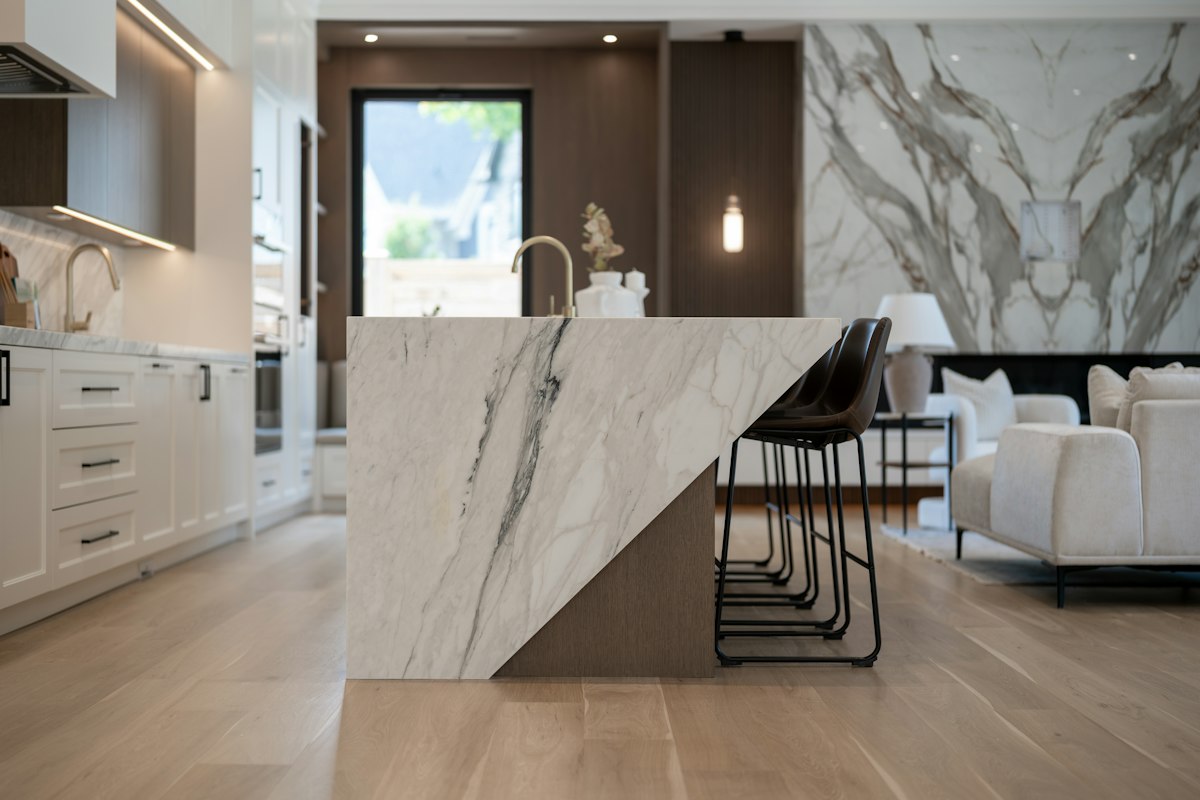
Natural stone remains a cornerstone of high-end design. However, the trend has shifted toward rare varieties like Taj Mahal quartzite or Calacatta Borghini marble, often used in large-format slabs to minimize grout lines and create a monolithic, sculptural look. The way these materials are finished—whether honed, leathered, or polished—can dramatically change the mood of a room. It is this level of detail that defines a truly bespoke space.
Custom Millwork and Cabinetry
In a luxury renovation, cabinetry is treated as furniture. Custom millwork allows for a level of integration that is impossible with semi-custom options. Think of hidden appliance garages, integrated lighting inside drawers, and motorized cabinets that open with a touch. Using exotic veneers like ebony or walnut, often finished with high-gloss lacquers or hand-rubbed oils, ensures that the storage in your home is as beautiful as it is functional.
Integrating Invisible Technology and Smart Systems
Modern luxury is increasingly defined by how a home performs, not just how it looks. A sophisticated renovation integrates technology so seamlessly that it becomes invisible. This includes centralized systems for climate control, lighting, security, and entertainment. Instead of a wall cluttered with switches and thermostats, you have a single, elegant interface or voice-controlled system that manages the entire environment.
Acoustic engineering is another often-overlooked element of luxury. High-end renovations utilize specialized insulation, silent HVAC systems, and even acoustic plaster to ensure that the home remains a quiet retreat from the outside world. This focus on the "invisible" aspects of the home—the air quality, the sound levels, and the ease of use—is what separates a high-end project from a standard one.
The Kitchen and Master Suite: The Heart of the Investment
When it comes to return on investment and daily enjoyment, the kitchen and the primary suite are the most significant areas of focus. A luxury kitchen is often split into two zones: a "show kitchen" for entertaining and a "prep kitchen" or scullery for actual food preparation. This allows the main living area to remain pristine while staff or family members handle the heavy lifting of meal prep behind the scenes. High-performance appliances from brands like La Cornue, Sub-Zero, and Wolf are standard, but the real luxury lies in the customization of the layout to suit your specific cooking habits.
The primary suite has evolved into a private sanctuary, often rivaling five-star spas. This includes features like steam showers with aromatherapy, heated floors, and custom-built dressing rooms with boutique-style display lighting. The goal is to create a space for total relaxation, which often requires significant plumbing and electrical upgrades to support high-flow showerheads and advanced lighting scenes.
Managing the Financials and Timelines
A luxury home renovation is a significant financial commitment, and transparency is paramount. High-end projects are rarely billed on a fixed-price basis because the level of customization makes it difficult to predict every cost upfront. Most elite contractors work on a "cost-plus" basis, where you pay the actual cost of materials and labor plus a management fee. This model requires a high degree of trust but allows for the flexibility needed to make changes as the project evolves.
Timelines in the luxury sector are also longer than average. Custom windows from Europe can have a lead time of six months, and specialized artisans may be booked a year in advance. A successful renovation requires a master schedule that accounts for these long-lead items. It is better to delay the start of construction until all major components are ordered than to have a crew sitting idle on-site waiting for a specific marble slab to arrive from overseas.
FAQ
How much does a luxury home renovation typically cost per square foot?
While costs vary significantly by region and the level of finish, luxury renovations generally start at $400 to $600 per square foot and can easily exceed $1,500 per square foot for ultra-high-end projects involving structural changes and rare materials. This reflects the cost of premium labor, bespoke cabinetry, and high-performance systems.
Should I stay in my home during a major luxury renovation?
For a high-end project, it is almost always recommended to move out. The level of dust, noise, and disruption is significant, and having the home empty allows contractors to work much more efficiently. Living on-site often extends the project timeline and can lead to increased stress for the homeowner.
How do I ensure my renovation doesn't go out of style in five years?
The key to longevity is focusing on "classic" luxury elements—natural stone, high-quality hardwoods, and excellent proportions. Avoid chasing hyper-specific design trends. Instead, use neutral, high-quality finishes for the permanent elements of the home and express your personal style through furniture, art, and lighting which are easier to update.
What are the most important smart home features to include?
Focus on the "Big Three": lighting control, climate management, and security. Systems like Lutron for lighting and Savant or Crestron for total home integration are industry standards. Automated window treatments are also a high-value addition, as they protect your art and furniture from UV damage while enhancing privacy.
Does a luxury renovation always increase the resale value?
While a well-executed renovation typically increases value, it is possible to "over-improve" for a specific neighborhood. To maximize ROI, focus on universal luxuries like a gourmet kitchen, an expansive primary suite, and modern infrastructure. Highly personalized features, like a professional-grade recording studio or an indoor bowling alley, may not offer the same return.
Conclusion
A luxury home renovation is an opportunity to redefine your living experience and create a legacy property that reflects your unique vision. By prioritizing a collaborative team, sourcing exceptional materials, and focusing on the invisible details that provide comfort and convenience, you can ensure a result that is both beautiful and functional. While the process demands patience and a significant investment, the outcome is a bespoke environment that enhances your daily life in ways a standard home never could. Approach the project with a long-term perspective, and you will create a space that remains a source of pride and comfort for decades to come.